
In the decade since Entergy joined the Midcontinent Independent System Operator (MISO), the local grid has seen little change. Extreme weather events like the 2018 cold snap, Winter Storm Uri, and hurricanes Laura and Ida have exposed the grid's limitations, and yet improvements have been slow to appear. While there's been talk of weatherizing power plants, there's been far less discussion about expanding the grid's capacity to move electricity from where it's generated to where it's needed most.
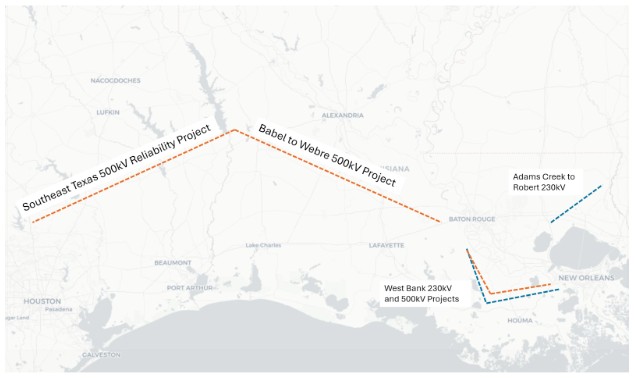
(Source: MISO MTEP23 and 25 and Entergy project listing)
Fortunately, that appears to be changing. After years of advocacy by SREA for a more connected and resilient transmission grid in MISO South, Entergy is developing meaningful improvements. Two years after Hurricane Ida's devastating power outages, MISO's MTEP23 process proposed over $3.5 billion in new transmission projects spanning Southeast Texas to South Louisiana. Some projects target specific grid vulnerabilities that SREA twice identified - once after Ida, and again in relation to a recently cancelled MISO project. While "better late than never" feels inadequate, these projects are genuinely overdue.
The Gulf Coast's Transmission Problem
As our coverage of the May 25 load shed event documented, transmission constraints have long plagued the Gulf Coast in MISO South. Load pockets along the coast - stretching from Texas across Louisiana - have consistently limited transmission flows. During both Winter Storm Uri and the May 25 load shed, energy flows were severely restricted along the 500kV corridor linking the Western, Atchafalaya Basin, Amite South, and Downstream of Gypsy load pockets. These pockets continue to pose a liability, making recent transmission projects a crucial step for MISO South to increase the ability to transfer power across this highly constrained area.
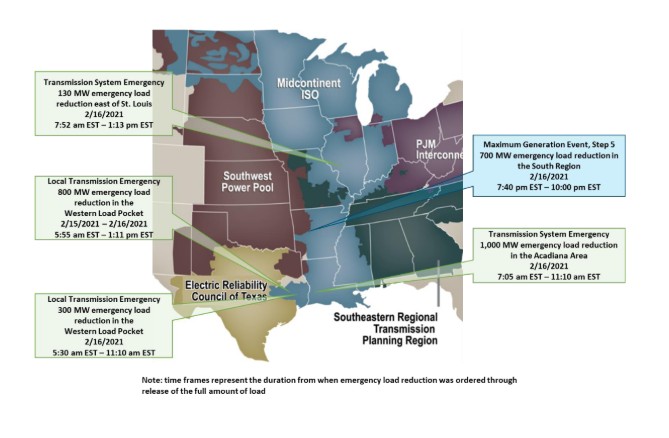
(Source: MISO Arctic Weather Event Report. As detailed in the report on page 17, from ‘8-8:05amCST the system experienced a ‘Transmission System Emergency due to large transmission flows on Webre-Wells 500 kV transmission corridor, risk of cascading outages’ and a ‘500 MW emergency load reduction from Local Balancing Authorities to mitigate Webre-Wells 500 kV line issues’)
While these projects in the MISO MTEP process are aimed at relieving these constraints on the Gulf Coast, a crucial question remains: are they solving tomorrow's problems or only yesterday's? Major power outages shouldn't be required to trigger proactive transmission planning.
'The Era of Flat Load Growth is Over'
Unprecedented demand from data centers is transforming MISO's footprint. The grid planner's ongoing Futures process is investigating the full scope of this new demand. Utilities in MISO forecast 61 gigawatts (GW) of new demand, mostly from planned data centers, just over half of MISO's all-time peak load of 127 GW reached last summer. And while not all of these forecasted facilities will be built, the trend is footprint-wide - and MISO South is already experiencing major impacts.
Two Amazon facilities under construction in Mississippi will increase Entergy Mississippi's demand by more than a third of their current 3.4 GW peak. Meta's planned Richland Parish, La., facility is the company's largest-to-date. The package approved by the Louisiana Public Service Commission (LPSC) includes over 2 GW of new gas generation and 1.5 GW of solar.
According to the Energy Information Administration (EIA), an additional 3.6 GW of solar, 183 MW of wind, and over 4 GW of gas are planned for MISO South by 2029. These represent significant changes to a system already facing reliability challenges, and this is likely just the beginning of what will be built over the next 20 years.
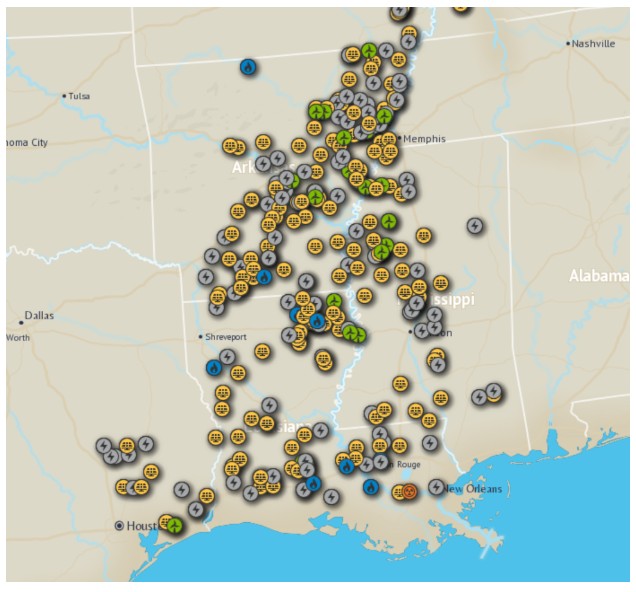
(Source: MISO Generator Interconnection Queue - Active Projects Map. Currently in MISO South there is 33GWs of solar, 11GWs of hybrid resources, 9.37GWs of gas, 5.9GWs of energy storage and 5.4GWs of wind energy. Worksheet of interconnection projects found here.)
In the pipeline, MISO South’s generator interconnection queue now totals over 60 GW of new generation—9 GW gas and 51 GW renewable energy. This represents a major shift, and recognizing trends like these is essential for proactive planning. To date, inputs of this type have largely been overlooked in MISO South transmission planning. The transmission grid is the power‑delivery highway, and it must stay ahead of the curve to ensure affordable, reliable energy. If you anticipate traffic years in advance, planning for it is simply smart.
Long-Range Planning Finally Arrives
MISO's Long Range Transmission Plan (LRTP) has been presented in multiple forums over recent months, consistently tied to the May 25 event. These documented load pockets seem like a natural fit for LRTP's scope. However, a key question remains: are load pockets the only issue requiring attention over LRTP's 20-year planning horizon?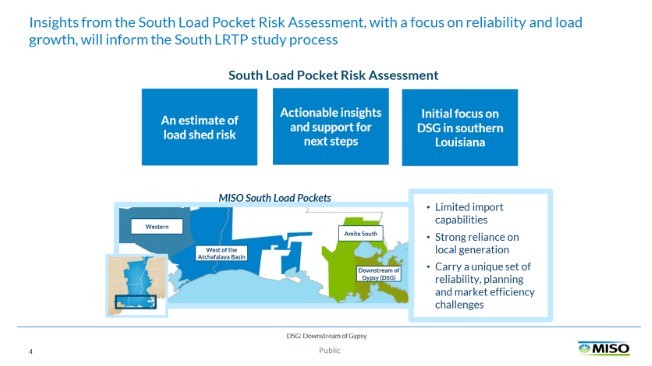
(Source: Entergy Regional States Committee Working Group Open Meeting - Transmission Update)
Balancing generation and transmission lies at the heart of planning MISO South's future grid. Truly addressing reliability in MISO South requires either adding additional generation sources through the interconnection process, or adding additional transmission infrastructure that can reliably access existing generation and accommodate future buildout as well. LRTP has historically aimed to manage this balance to yield a “least regrets” portfolio—projects that are not prohibitively expensive and that provide robust reliability for the long term. Until recently, LRTP for MISO South focused mainly on Louisiana load pockets, but following outreach from the Public Utility Commission of Texas, Southeast Texas will now be included. With load growth accelerating in both Arkansas and Mississippi, those states will likely need attention as well, reinforcing the importance of balancing generation and transmission investments.
The Path Forward
While they didn't emerge from a process explicitly designed to balance generation and transmission, projects like Babel to Webre, the Southeast Texas Reliability Project, and other load-pocket-related projects from MISO's MTEP process represent thoughtful planning by Entergy Louisiana to enhance grid reliability and resilience. Much more will likely be needed through the MISO South LRTP effort, but these projects are worthy investments addressing concerns we've raised for years.
We strongly urge the MISO Board to approve the Babel to Webre project in MTEP25 at the upcoming Board Week. We're grateful for the coordination among MISO, Entergy Louisiana, and stakeholders in identifying solutions that improve MISO South's affordability, reliability, and resilience. We look forward to continuing this collaboration throughout the MISO South LRTP process.