
News & Updates

University of Miami Study Finds Offshore Wind Areas in Gulf Pose Minimal Impacts to Shrimping Grounds

University of Miami Study Finds Offshore Wind Areas in Gulf Pose Minimal Impacts to Shrimping Grounds

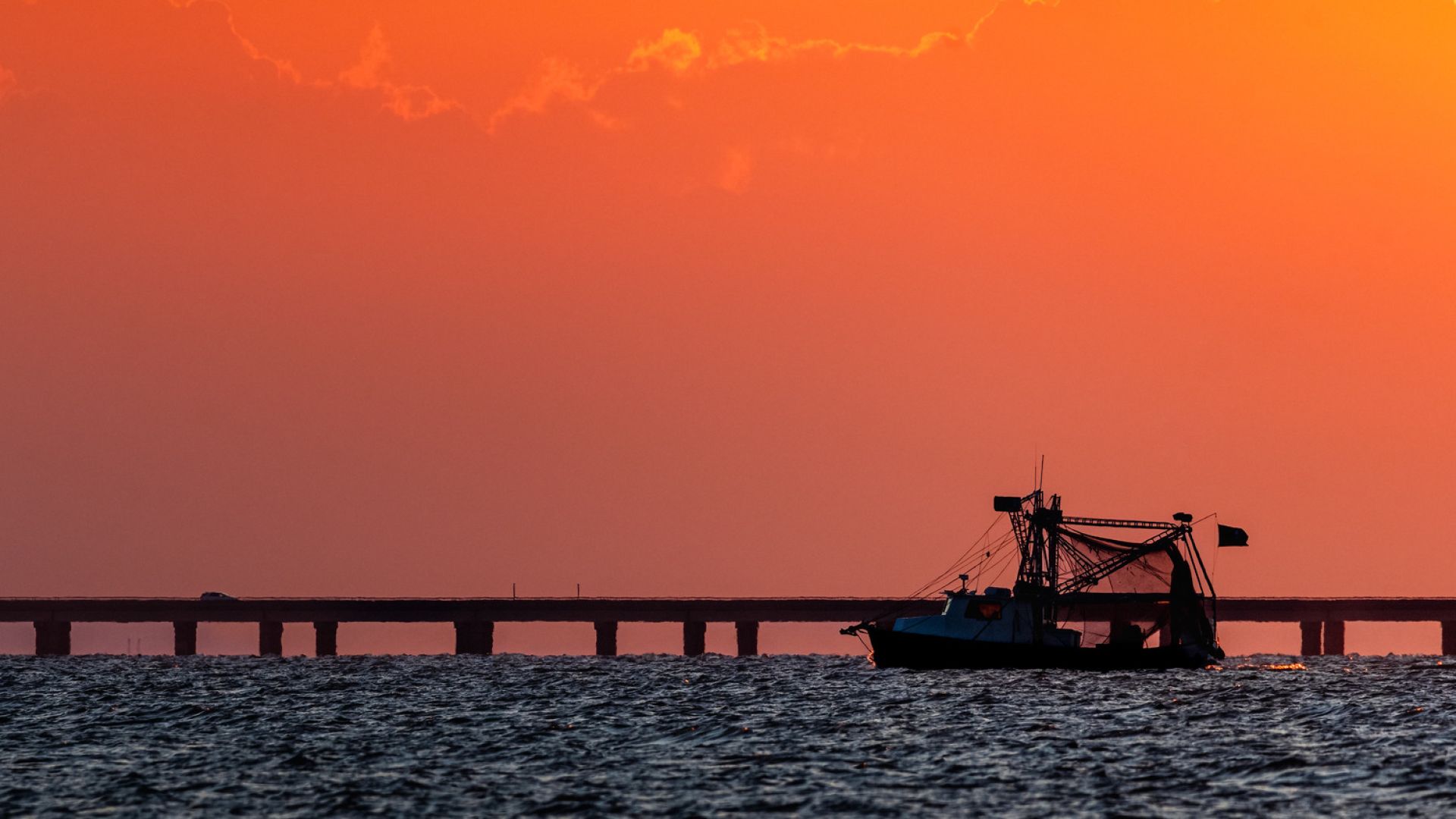
A study published in November in the journal Marine and Coastal Fisheries provides new insight into how proposed development areas in the Gulf of Mexico are already being used, helping ensure that the transition to renewable energy does not disrupt existing commercial activities in the region.
 
The study found that wind energy areas designated in the Gulf largely avoid regions heavily used by the shrimp industry, suggesting that offshore wind development would have minimal impact on shrimping activities. Researchers also found that shrimpers largely avoid oil rigs; however, in areas with many rigs nearby, shrimp boats will often find what they called a "sweet spot" distance of about three miles between the rigs, which the researchers say provides a good balance between maximizing the safety of the crew and utilizing the area for continued trawling.
 
A research team led by scientists at the University of Miami Rosenstiel School of Marine, Atmospheric, and Earth Science Cooperative Institute for Marine and Atmospheric Studies (CIMAS) used GPS data collected from shrimp vessels to analyze how these vessels operate around oil rigs, distinguishing between fishing and transit behavior. Brandon Turley, a scientist at CIMAS and NOAA fisheries and the study's lead author, noted that as the ocean becomes increasinly industrialized with oil rigs and offshore wind turbines, stakeholder planning and communication are proving vital to the shrimp industry's coexistence in the Gulf.
 
"To balance offshore energy development with fishing, we need high-resolution vessel data like this to see where activities overlap," Turley said. “Beyond commercial activity, oil rigs also serve as popular recreational fishing and diving sites, highlighting that offshore infrastructure has complex, nuanced impacts rather than being simply labeled ‘good’ or ‘bad,” said Turley.


The study, titled “Spatial Dynamics of the Gulf Shrimp Fishery: Mechanistic Drivers and Potential Implications for Offshore Energy Development,” was published on Nov. 6 in the journal Marine and Coastal Fisheries

The authors are: Brendan D. Turley1,2,* , Kyle Dettloff, Willem Klajbor1,, Molly Stevens, Lisa Ailloudand Kevin Craig6

1) Cooperative Institute for Marine and Atmospheric Studies, University of Miami, Miami, Florida, USA, 2) Southeast Fisheries Science Center, National Marine Fisheries Service, National Oceanic and Atmospheric Administration, Miami, Florida, 3) Atlantic Oceanographic and Meteorological Laboratory, National Oceanic and Atmospheric Administration, Miami, Florida, 4) Southeast Fisheries Science Center, National Marine Fisheries Service, National Oceanic and Atmospheric Administration, St. Petersburg, Florida, 5) Southeast Fisheries Science Center, National Marine Fisheries Service, National Oceanic and Atmospheric Administration, Charleston, South Carolina, 6) Southeast Fisheries Science Center, National Marine Fisheries Service, National Oceanic and Atmospheric Administration, Beaufort, North Carolina,

Powering Louisiana

Powering Louisiana is a nonpartisan coalition of Louisianans united to identify, engage, and empower voices across the state who support utility-scale renewable energy developments. Our mission is simple: accelerate energy growth in The Pelican State by finding and connecting landowners, farmers, business leaders, and community stakeholders who understand that a modern, reliable grid requires local, scalable solutions.

If you agree that we need to move every available electron we can get onto the grid to build a future for Louisiana where energy is homegrown, reliable, and abundant, Powering Louisiana invites you to join us. This is about real progress, real collaboration, and real results—together, we will drive the energy future Louisiana deserves.

Icon with three men

Challenge Misinformation

Powering Louisiana partners with communities across the state to counter misinformation about renewable energy and to support community leaders in crafting clear, practical language for advocating when wind or solar projects come to their areas.

Icon with clipboard and checkmark

Coalition Building

Powering Louisiana believes lasting change comes from uniting communities, policymakers, and industry partners to advocate for transparent, evidence-based renewable energy policies. By forming broad coalitions across the state, we advance practical, affordable power solutions that protect everyday Louisianans.

Icon with dartboard and dart in the center

Take Action

Powering Louisiana champions policies that grow renewable energy and shield the industry from harmful legislation. We work to ensure practical siting guidelines, reliable bonding standards, and clear decommissioning processes so projects can thrive in communities across the state.